How Often Should You Change the Oil in an RV or Motorhome?
You have the route planned, the pantry stocked, and the campsite booked. But before you point your motorhome toward the open road, there is one question that decides whether the trip goes smoothly or ends on the shoulder: when was the last time you changed the oil?
Owners of cars and trucks can usually rely on a sticker in the windshield. RV owners have a tougher time. Motorhomes sit for months, then cover thousands of miles in a few weeks. They weigh far more than any passenger vehicle, they climb mountain grades with a full load, and many carry a second engine, the generator, that has its own oil schedule. So the answer to "how often should you change the oil in an RV or motorhome?" is not one number. It is a range that depends on your engine, your oil, your driving, and how you store the coach.
This guide walks through every factor so you can set a schedule that fits your rig. If you would rather skip the crawling, the ramps, and the mess, our mobile oil maintenance services bring the service to your driveway, storage lot, or campsite anywhere in San Diego.
The Quick Answer: How Often Should You Change RV Oil?
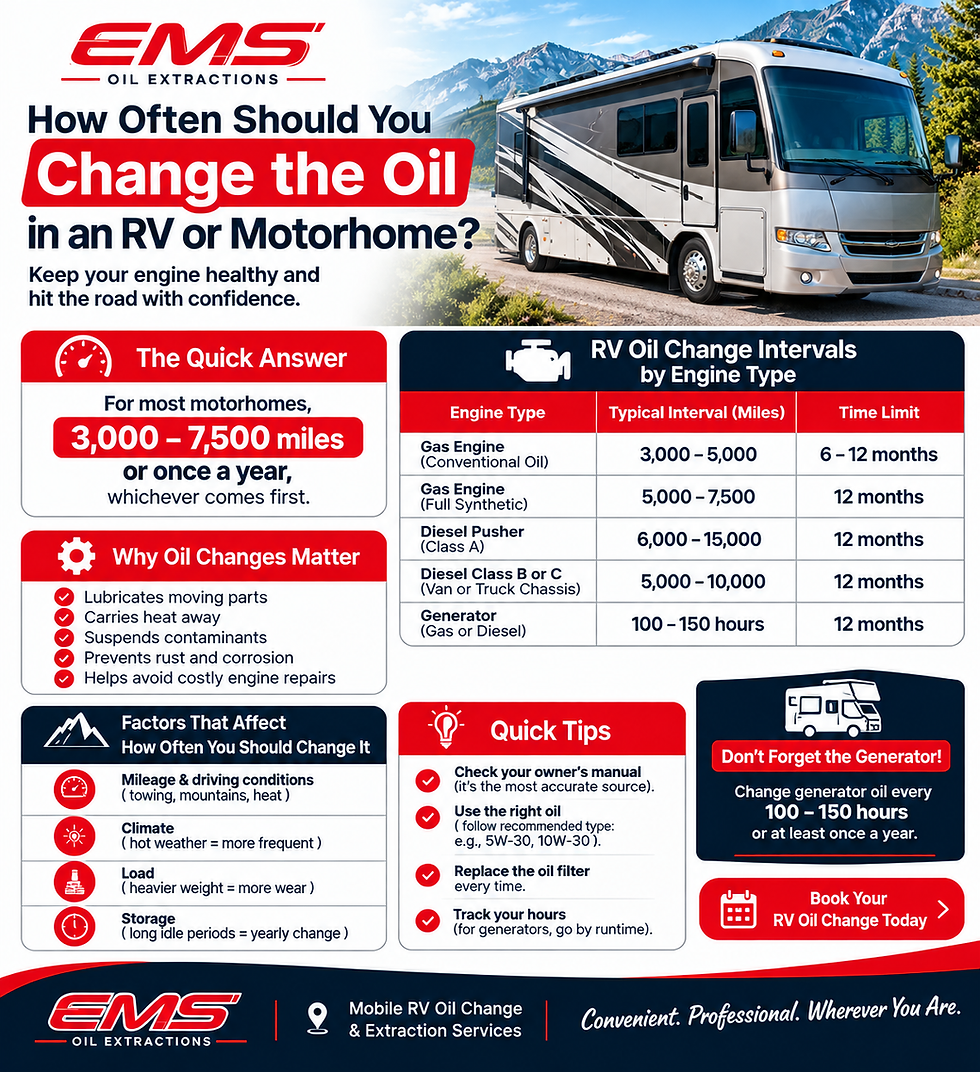
For most motorhomes, change the engine oil every 3,000 to 7,500 miles or once a year, whichever comes first. The exact interval depends on the engine and oil type:
Gas motorhomes using conventional oil: about every 3,000 to 5,000 miles.
Gas motorhomes using full synthetic oil: about every 5,000 to 7,500 miles.
Diesel pushers: often every 6,000 to 15,000 miles, based on the engine maker's guidance, oil capacity, and filtration.
Any RV driven rarely: at least once every 12 months, even if the odometer barely moved.
Generator: commonly every 100 to 150 hours of runtime, or yearly.
Always treat your owner's manual and engine manufacturer as the final word. The numbers above are typical ranges, and heavy use, towing, and extreme heat can shorten them.
Why Oil Changes Matter More for Motorhomes
Engine oil does four jobs at once: it lubricates moving parts, carries heat away, suspends contaminants like soot and metal particles, and protects against corrosion. As oil ages, additives wear out, the oil thickens or thins, and it loads up with debris. Old oil cannot do any of those jobs well.
For a motorhome, that problem is magnified. A large engine pulling a coach that can weigh 15,000 to 50,000 pounds works much harder than a sedan engine, and the oil absorbs that stress. When oil breaks down, friction rises, temperatures climb, and sludge can form. Repairs on a motorhome engine are expensive, and a breakdown far from home can be worse than the repair bill itself. Regular oil service is one of the cheapest forms of insurance an RV owner can buy.
RVs Are Not Cars
Many RV owners assume the same rules as their daily driver apply. They do not. A motorhome's engine often spends long periods at high load: climbing grades, pushing against wind, and holding highway speed with a heavy frame behind it. Then it may sit for weeks. Both extremes, hard work and long idle storage, are tough on oil. Fuel and moisture can build up during short trips, and oil left sitting can absorb condensation and oxidize.
Weight, Heat, and Load
Heavier loads create more heat, and heat is the biggest enemy of motor oil. Every additional 20 degrees or so can speed up oil oxidation. In Southern California, summer temperatures, desert drives, and steep climbs out of the San Diego basin all add stress. If you tow a car, trailer, or boat behind your motorhome, the engine works even harder, and the interval should shrink accordingly.
RV Oil Change Intervals by Engine Type
The table below summarizes typical ranges. Your manual may say something different, and when it does, follow it.
Gas Motorhomes (Class A and Class C)
Gasoline-powered coaches are the most common on the road. These engines typically hold five to eight quarts of oil, and many chassis makers recommend 3,000 to 5,000 miles on conventional oil or longer with synthetic. Because motorhomes often qualify for what manufacturers call "severe service" (towing, heavy loads, hot weather, stop-and-go driving), it is smart to use the shorter end of the range unless your manual says otherwise.
Diesel Pushers
Diesel engines are built for heavy work and hold much more oil, often 25 to 40 quarts. That large sump, combined with robust filtration, is why many diesel pushers can go 6,000 miles or more between changes, and some engine makers allow far longer when paired with oil analysis. Even so, diesels still need regular service. Heavy-duty diesel oils must handle soot, and ignoring intervals can lead to expensive wear. Because of the big oil volume, a diesel oil change also costs more, which is one more reason to follow the right schedule and avoid both over- and under-servicing.
Class B Camper Vans
Smaller camper vans often use compact gas or diesel engines that run at higher stress relative to their size. They tend to follow the base vehicle's manufacturer schedule, but with frequent travel, mountain driving, and cargo, treat them as severe service.
Time Matters as Much as Mileage
Here is the part many RV owners miss: oil ages even when the engine is off. A motorhome that sits for most of the year may put on only 1,500 miles, so a mileage-only schedule would suggest an oil change every two or three years. That is a mistake.
When oil sits, it can collect moisture from humid air, oxidize slowly, and lose additive strength. Short drives that never fully heat the engine make this worse because moisture and fuel do not burn off. The rule of thumb is simple: change the oil at least once every 12 months, no matter how little you drive. If your coach spends months in storage, changing the oil right before a long trip, and again at the end of the season if you drove heavily, is a good habit.
Pre-Storage vs. Post-Storage Changes
Owners often ask whether to change oil before or after storage. Many mechanics favor changing it before long-term storage so the engine does not sit with dirty, acidic, contaminant-loaded oil. Then check the level and condition when you de-winterize. If the coach has been sitting for a year or more, a fresh oil change before the first big trip is still wise.
What Shortens Your RV's Oil Change Interval
The numbers in your manual assume reasonable conditions. Most motorhomes are not driven under reasonable conditions. Watch for these factors, and move toward the shorter end of the range when any apply.
Towing a Vehicle or Trailer
A tow vehicle, trailer, or boat adds load and raises engine and transmission temperatures. If you tow regularly, cut your interval by 20 to 30 percent, or follow the severe-service schedule in your owner's manual.
Hot Weather and Mountain Grades
High ambient temperatures and long climbs push oil temperatures up. Driving through the desert, over the Grapevine, or up toward Julian puts significant strain on the engine. If you spend summers in hot regions, plan for earlier oil changes.
Short Trips and Stop-and-Go Driving
If you mostly make short drives, for example from storage to a nearby campground, the engine may not reach full operating temperature long enough to burn off moisture and unburned fuel. Oil contaminated with fuel and water loses protective qualities quickly.
Dusty or Off-Pavement Conditions
Dirt roads and dusty campsites increase the load on the air filter and can allow fine particles into the engine. If you camp off-grid often, inspect filters more often and consider shortening your oil interval.
Extended Idling
Running the engine to power the air conditioner or charge batteries is common among RV owners, but it counts as engine hours that mileage does not capture. Heavy idling is a form of severe service, since the engine runs without much airflow or load. If you idle a lot, track engine hours as well as miles.
Don't Forget the Generator
Your motorhome's generator is a separate engine with its own oil system, and it is one of the most overlooked maintenance items on any RV. Generators typically need an oil change every 100 to 150 hours of runtime, though some manufacturers specify different intervals, and many also recommend at least an annual change.
Because generators run under varying loads and often sit unused, they can accumulate moisture and old oil quickly. Run time is easy to track: most units have an hour meter. A good habit is to log hours after every trip and schedule an oil change when you approach the limit. If you rely on your generator to run the A/C in summer or power appliances while dry camping, a neglected generator can fail at the worst time.
If you are not sure how to service yours, a mobile technician can help. Ask about generator service when you schedule a motorhome oil change, and keep a written record with the date and hours.
Choosing the Right Oil: Conventional, Blend, or Synthetic
The oil you use affects how long you can go between changes. Here is how the options compare.
Conventional Oil
Conventional oil is refined from crude and costs less, but it breaks down faster under heat and load. It works fine for older gas engines run lightly, but heavy-duty RV use shortens its life. If you stick with conventional, stay on the shorter end of the interval.
Synthetic Blend and Full Synthetic
Full synthetic oil resists heat, flows better in cold starts, and holds its additives longer. For motorhomes that tow, climb, and sit, synthetic is often a worthwhile upgrade, and it can support longer drain intervals when the manufacturer allows it. Synthetic does not mean you can ignore time limits, though. Oil still ages in storage, so the annual change rule still applies.
Viscosity and Specifications
Use the viscosity grade listed in your manual, such as 5W-30 or 15W-40, and make sure the oil meets the specification the manufacturer requires. Diesel engines usually need heavy-duty diesel oil with the correct API rating (for modern diesels, commonly CK-4 or similar). Using the wrong oil can reduce protection and may affect warranty coverage. If you are unsure which oil your coach needs, ask before you buy.
Signs Your Motorhome Is Overdue for an Oil Change
A schedule is the best guide, but your coach can also tell you when something is wrong. Watch for these warning signs:
Dark, gritty, or thick oil on the dipstick. Fresh oil is amber. Oil that is black and sludgy needs to go.
Milky or foamy oil. This can mean coolant or moisture contamination and needs prompt attention.
A louder engine or ticking noises. Worn oil provides less cushioning for moving parts.
The oil pressure light or low oil-life indicator. Never ignore a pressure warning. Stop safely and check the level.
Burning smell or visible smoke. Oil leaks or consumption can signal a larger issue.
Reduced fuel economy or sluggish power. Dirty oil adds friction.
Exceeded time or mileage. If you have blown past your interval, schedule service rather than waiting for a symptom.
If you see any of these, get the engine checked quickly. Small problems are cheap to fix. Neglected ones are not.
A Simple Pre-Trip Oil Checklist
Before every long trip, take five minutes to check your engine oil. Here is a quick routine:
Park on level ground and let the engine sit for a few minutes so oil can settle.
Pull the dipstick, wipe it clean, reinsert it fully, and pull it again.
Check the level against the marks and note the color and texture.
Look under the coach for fresh drips or stains.
Check the generator oil as well, and note the hours.
Log the date, mileage, and engine hours in a maintenance record.
This habit catches low oil before it causes damage and gives you a clear history to share with a technician.
Why Oil Extraction Is a Smart Fit for Motorhomes
Traditional oil changes require draining oil from the bottom of the engine, which means crawling under a heavy coach, finding the drain plug, and dealing with limited ground clearance. Many RVs are tall, long, and hard to access, and some shops cannot accommodate them at all.
Oil extraction works differently. A technician uses a vacuum system to pull used oil out through the dipstick tube, so there is no need to remove a drain plug or lift the vehicle. If you want to see exactly how it works, you can watch how oil extractions work on our services page.
How Oil Extraction Works
The process is simple and clean. A hose is passed down the dipstick tube to the oil sump, where a pump draws out the used oil into a sealed container. The old filter is replaced, fresh oil is added to the correct level, and the engine is checked. Because the oil is contained throughout, there is far less chance of spills, and the work can be done almost anywhere.
Benefits for RV and Motorhome Owners
No ramps, jacks, or crawling. Large coaches are hard to raise. Extraction avoids that problem.
Cleaner service. A sealed process reduces drips and mess on driveways, storage lots, and campgrounds.
Less environmental risk. Contained oil means fewer spills and responsible disposal.
Convenience. You do not need to find a shop with a bay tall and long enough for your coach.
Faster turnaround. Without a lift or drain plug, the process is efficient.
For more on how the two methods compare, read our breakdown of oil extraction versus a traditional oil change.
Mobile RV Oil Change Service in San Diego
The best part of oil extraction for a motorhome owner is that it pairs perfectly with mobile service. Instead of driving a 35-foot coach to a shop, finding parking, and waiting, you can have a technician come to you. Whether your RV sits in your driveway, a storage facility, or a campsite, EMS Oil Extractions provides mobile oil services for motorhomes throughout San Diego and surrounding areas, including Lemon Grove, El Cajon, and nearby communities.
Mobile service also makes it easier to stay on schedule. When service takes place at your location, you are more likely to do it before the trip instead of putting it off. If you have already read about how on-site service saves time, our post on mobile oil changes in El Cajon shows what that looks like in practice.
We also serve other types of vehicles. Owners who haul a toy hauler or ride in the desert can ask about our UTV oil change service, and business owners can learn about our fleet services.
A Seasonal Schedule You Can Actually Follow
If you want a simple plan, here is one that works for most RV owners:
Before your first big trip of the season: Change the engine oil and filter, check the generator oil, and inspect other fluids.
Mid-season (heavy travelers): Check mileage and hours. If you have driven 3,000 to 5,000 miles on conventional oil, or have towed heavily, schedule a change.
Before storage: Change the oil if you have driven since the last service, so the engine does not sit with used oil.
Every 100 to 150 generator hours: Change generator oil and filter.
At least every 12 months: No exceptions, regardless of mileage.
Write down each service with the date, mileage, and hours. A clear record helps you stay consistent and adds value if you ever sell the coach.
Common Mistakes RV Owners Make With Oil
Even careful owners slip up. Avoid these common errors:
Going by mileage only. Time and hours matter just as much.
Skipping the generator. It is an engine and needs oil like any other.
Using the wrong oil. Check viscosity and specification before buying.
Overfilling or underfilling. Both can damage the engine. Check the dipstick after service.
Ignoring severe-service conditions. Towing, heat, and heavy loads shorten intervals.
Not keeping records. Without a log, it is easy to forget when service was last done.
The Bottom Line
So, how often should you change the oil in an RV or motorhome? For most coaches, plan on every 3,000 to 7,500 miles for gas engines, 6,000 to 15,000 miles for diesel pushers when the manufacturer allows it, and at least once every year no matter what. Change generator oil every 100 to 150 hours or annually. Shorten these intervals if you tow, drive in extreme heat or mountains, make short trips, or idle for long stretches.
The best schedule is the one you actually follow, and the easiest way to follow it is to make service convenient. With mobile oil extraction, your motorhome gets a clean, efficient oil change without the hassle of finding a shop. Ready to schedule? Contact EMS Oil Extractions or call 619-361-7247 to book service at your location.
Frequently Asked Questions
How often should you change the oil in an RV?
Most RVs need an oil change every 3,000 to 7,500 miles or once a year, whichever comes first. Gas engines on conventional oil sit near 3,000 to 5,000 miles, synthetic can stretch to 5,000 to 7,500, and diesel pushers can go 6,000 miles or more depending on the engine maker's guidance. Always confirm with your owner's manual.
How often should you change the oil in a diesel pusher?
Many diesel pushers are changed every 6,000 to 15,000 miles or once a year. The right interval depends on the engine manufacturer, oil capacity, filtration, and operating conditions. Heavy towing or severe service calls for shorter intervals, and some owners use oil analysis to fine-tune the schedule.
Do you need to change RV oil if you rarely drive it?
Yes. Oil degrades over time even when the engine is off, because it absorbs moisture and oxidizes. If your RV sits most of the year, change the oil at least every 12 months, and consider changing it before long-term storage.
How often should you change RV generator oil?
Most generators need an oil and filter change every 100 to 150 hours of runtime, or at least once a year. Check your generator manual, since specific models can differ, and use the hour meter to track runtime.
Is synthetic oil worth it for a motorhome?
Often, yes. Synthetic oil handles heat and heavy loads better than conventional oil and can allow longer intervals when the manufacturer approves. It is especially useful for coaches that tow, climb mountains, or operate in hot climates. You still need to change it on a time schedule.
Can you change RV oil without draining it from the bottom?
Yes. Oil extraction removes used oil through the dipstick tube using a vacuum system, so there is no need to crawl under the coach or remove the drain plug. It is a clean, efficient option for large vehicles.
Does towing change how often I should change my RV's oil?
Yes. Towing adds load and heat, which wear oil faster. Many manufacturers classify towing as severe service and recommend shorter intervals. If you tow regularly, plan on changing oil earlier than the standard schedule.
Can a technician come to my RV for an oil change in San Diego?
Yes. EMS Oil Extractions offers mobile oil services for motorhomes at your location, whether that is your home, a storage lot, or a campsite in San Diego and nearby areas. Call 619-361-7247 to schedule.
Ready to Keep Your Motorhome Road-Ready?
Don't let an overdue oil change put your next trip at risk. EMS Oil Extractions brings clean, efficient mobile oil service to your RV, wherever it is parked. Book your motorhome oil service today or call 619-361-7247. You can also visit our homepage to learn more about everything we offer.


Comments